Ads are like pickup lines—most are terrible, but they don’t have to be.
I won’t pass up the chance to share a few:
- “Are you an astronaut? Because your beauty is out of this world.”
- “Do you have a map? I keep getting lost in your eyes.”
- “If you were a vegetable, you’d be a cute-cumber.”
So bad. And so good.
The problem with pickup lines isn’t the line—it’s how far you expect it to take you. Similarly, ads don’t close the sale. They’re the opener, like saying hi to a stranger at a bar.
Picture two guys at a bar who see a woman they’d like to talk to.
Guy one is Chad (it’s always Chad). He crowds her space (why is he wearing so much cologne), drops the astronaut line, and might even get her to say yes to a drink. But she’s skeptical, and the second she realizes the whole thing is a tactic—that he’s running a script to close the deal—she’s out. Be gone, Chad.
Then there’s Mario, who gets that the first goal is to start up a conversation. Then he can see how that goes, find out what she thinks about a first date, and so on. He might use the same pickup line, but it’s a totally different approach. He’s not forcing it—but he’s not hiding in the booth praying she’ll turn around and fall in love with him.
Because the job of any first encounter is simple: give them a reason to keep talking.
It’s Not About You
Most businesses are self-centered, even when they don’t mean to be. They’re excited about what they do and want you to feel it too. Unfortunately, this leads to some gosh-awful ads.

The message is “Look how special we are,” which comes across as “You want some of this, don’t you?”
When it comes to ads, the experience is the message.
The best ads pick one job: entertain, support, inspire, challenge. Anything but come home with me sell.
Take Gamma’s Rainn Wilson commercial, produced by Sandwich.co (one of my favorite agencies). Gamma is an AI-supported presentation tool. The ad has Rainn visiting his friend Grant (Gamma’s CEO) to see what it’s like to be a tech CEO. Gamma is only mentioned once when Grant says “We don’t do PowerPoint here. We use Gamma.” That’s it. The rest is Rainn being Rainn, ending alone in Grant’s office asking if sitting in the CEO chair makes him the CEO of Gamma.
Rainn Wilson might be CEO of Gamma
The goal isn’t “here are our features.” It’s “let me make you smile—and maybe you’ll come back for more.”
I know what you’re thinking: “But that’s tech. What we do isn’t sexy or exciting.” A lot of people assume boring is the only option if you’re a lawyer, a home builder, or a landscaper.
That’s like a guy thinking, “I don’t look like Henry Cavill, so meeting people at bars isn’t for me.” Really? There’s one Henry Cavill, and he’s not walking into this bar. (Though if he did, I would let him pick me up, physically and emotionally.)
And we have one of the greatest marketing campaigns of all time to prove it.
In 1959, Bill Bernbach had to sell the Volkswagen Beetle to Americans. The car looked boring: too small and too simple for the standards of the time. Worse, plenty of Americans still associated Volkswagen with Hitler. Bernbach’s solution? Lean into it. (The small part, not the Hitler part.)
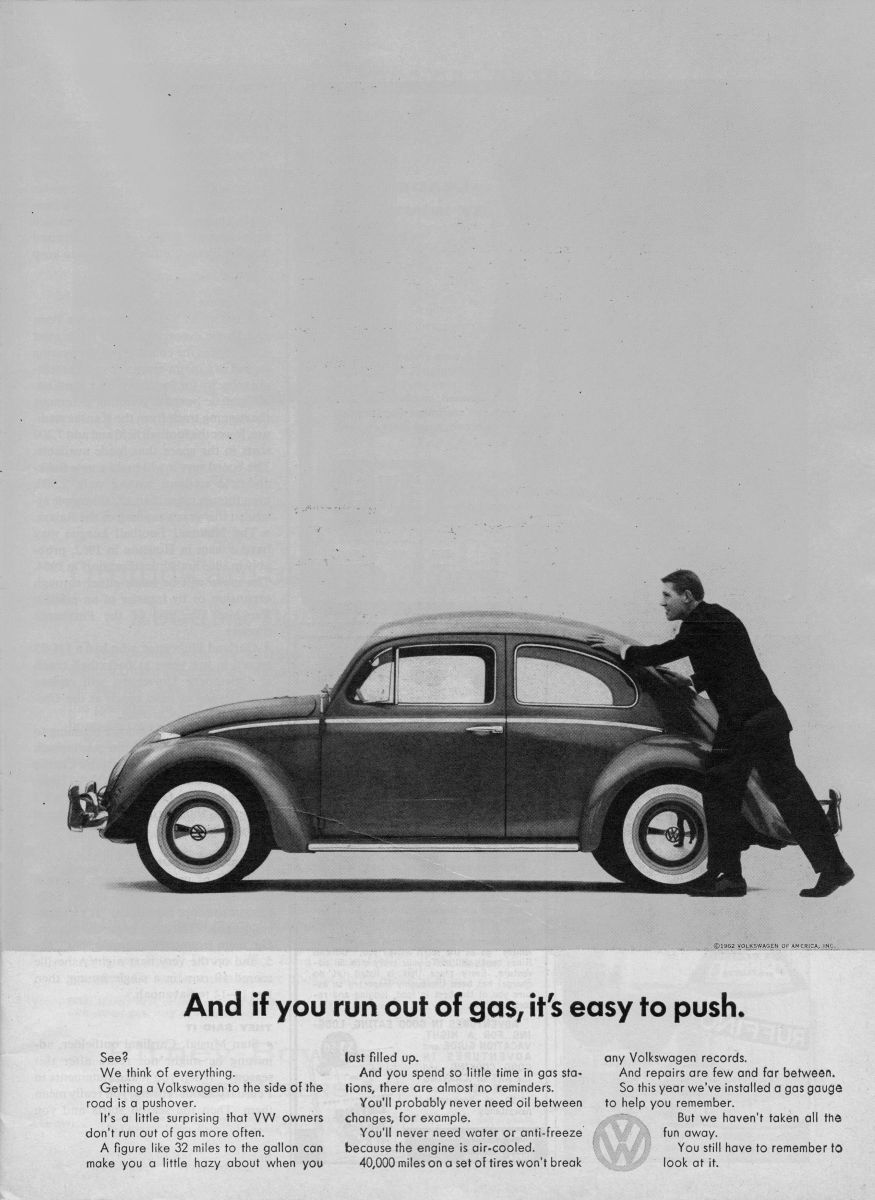
Self-deprecating, fun, and honest—no pretending the car was something it wasn’t. It made people smile and think “huh, maybe simple and small is actually better.”
That was over 60 years ago, and most boring businesses still haven’t learned the lesson. The bar is low if you are willing to try.
4 Ways to Make A Great First Impression
Here are four approaches worth trying:
1. Radical Honesty
- What it is: Lead with what you’re not—or what you can’t do—then show why that’s a strength.
- The bar version: Walking up and saying, “I’m a terrible dancer, but I’d love to talk to you anyway.” It lowers the other person’s guard immediately because you aren’t trying to maintain a perfect facade.
- When it works: When you can flip a perceived weakness into a real advantage.
- When it doesn’t: When the honesty doesn’t buy the reader anything or it turns into whining.
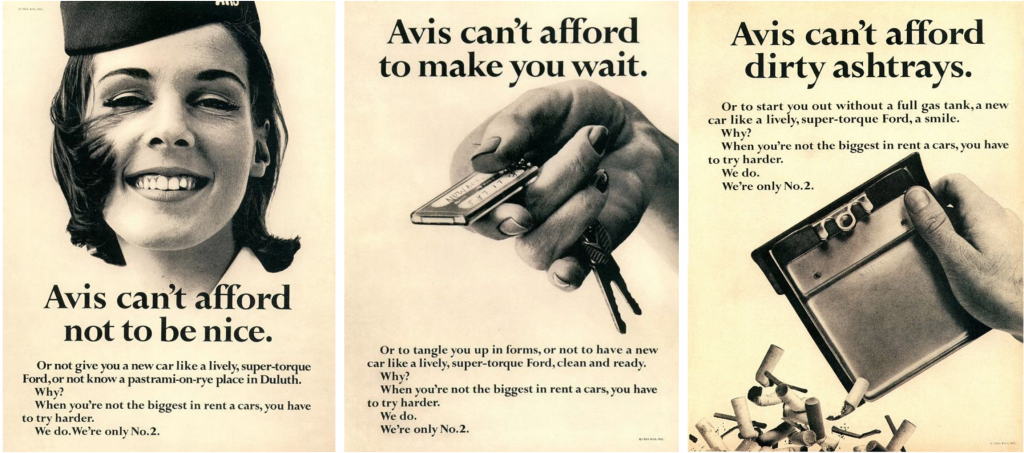
- Example: Avis ran a famous campaign based on a simple admission: “We’re number two. We try harder.” They didn’t pretend to be the biggest car rental company. They leaned into being second place and turned it into a promise about customer service.
2. Social Proof
- What it is: Let other people your audience trusts talk about you.
- The bar version: You don’t have to tell the other person you’re great—your best friend is already doing it for you. It’s more believable when someone else says it (assuming your friend isn’t a total weirdo).
- When it works: When you can feature real people your audience respects or relates to.
- When it doesn’t: When the endorsement feels bought or generic.
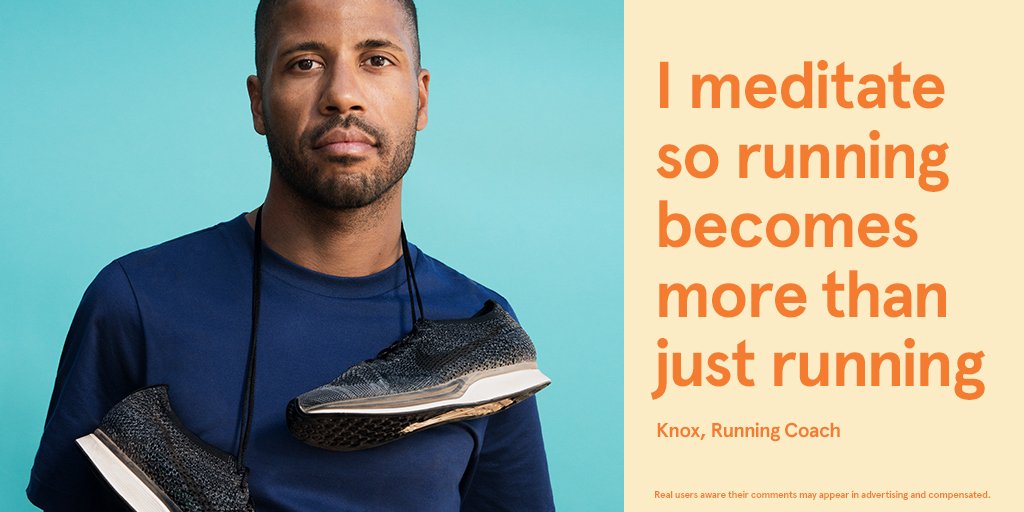
- Example: Headspace used running coach Knox Robinson in their ads. To runners, he’s a credible voice. Instead of Headspace telling you meditation works, they have someone who actually does the thing you want to do saying meditation helps.
3. Common Enemy
- What it is: Go after a bigger problem in the world.
- The bar version: Leaning over and saying, “Any chance you also hate this music? Because this is killing me…” She may love electro-country music (in which case it wasn’t going to work out anyway), but if not, you’re instantly connected by a shared annoyance.
- When it works: When there’s a shared frustration in your industry that you genuinely solve differently.
- When it doesn’t: When the enemy is vague (bad customer service), fake (cough…Pepsi), or hypocritical (you’re part of the mess).
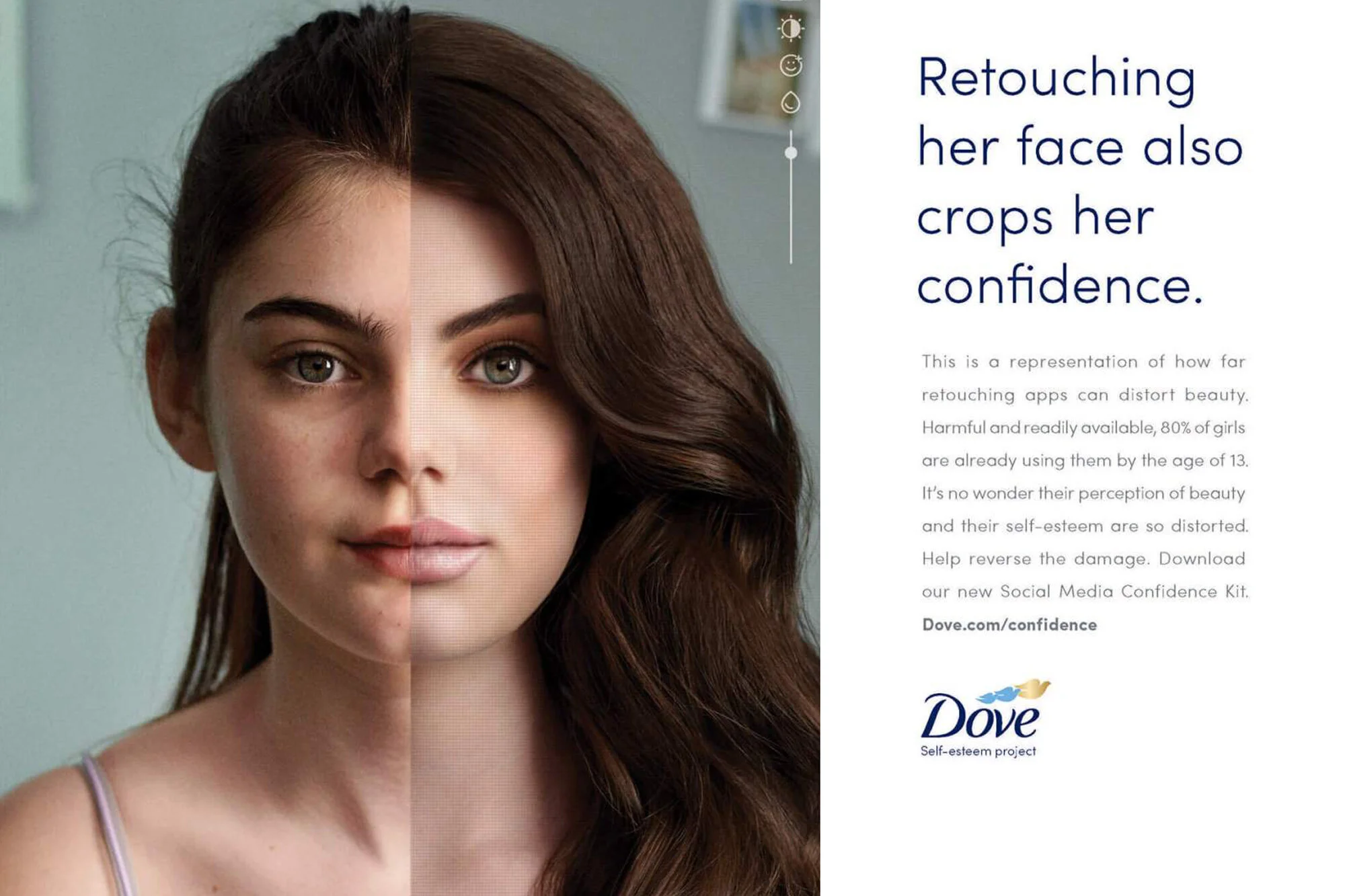
- Example: Dove has made fighting a common enemy a major part of their brand. Their campaigns—like this latest one against retouching apps—position them against artificial beauty standards. Their message: we’re on your side in this fight.
4. The Meme
- What it is: Lead with a simple, relatable image that pokes fun at a universal struggle in your industry. It proves you’re in on the joke.
- The bar version: You catch her eye after something weird happens at the bar and just give a “Can you believe that?” look. If you share a moment, who’s to say you can’t share more?
- When it works: When there’s a visual or situation everyone in your world recognizes.
- When it doesn’t: When the joke is too insider or it stops being playful and turns mean.
- Example: I made this for an estate-planning client. It works because it gives you that Jim-from-The Office look: we both get it, even if they don’t.
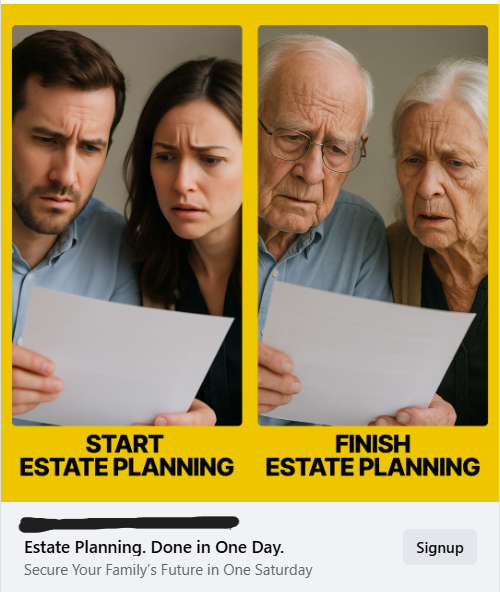
We also had supporting copy to take people from first impression to ongoing conversation.
Now go hit the bars.